

The night of March 18th started off like every other night of this war.
Iran’s early-warning systems were tracking Israeli and American strike packages that had been hitting military infrastructure for three weeks. The IRGC air defense network was systematically dismantled.
However, what was left of Iran’s missile corps was spending down its last inventory on anything within range.
Four of the five missiles fired that night were intercepted.
The fifth one wasn’t.
Yet, it was that last one that struck Ras Laffan Industrial City at approximately 11:40 p.m. local time.
Why was this such a critical location? Well, as you know, Ras Laffan sits on Qatar’s northeastern coast — a flat, industrial moonscape on the edge of the Persian Gulf that most people have never heard of.
To be fair, if you’re not in the energy business, there’s no reason you would have heard of Ras Laffan.
But inside that fence line is the largest liquefied natural gas export complex in the world.
In total, there are 14 LNG production trains located there, as well as a gas-to-liquids facility, and storage tanks the size of city blocks.
If you haven’t guessed by now, dear reader, Ras Laffan is the nerve center of Qatar’s entire economy — a country that earns roughly 77% of its GDP from a single address that just got hit.
By the time the sun rose the next day, the extent of the structural damage suffered was clear — Train 4 was hit hard, and things looked much worse for Train 6.
Satellite imagery showed that the primary cryogenic heat exchangers had partially collapsed. 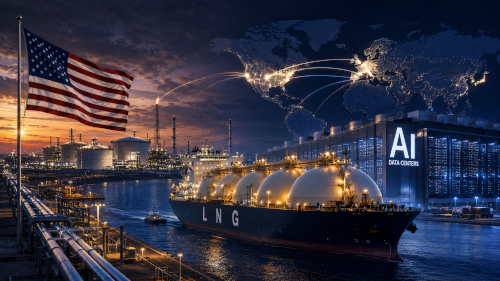
Keep in mind that these aren’t components you swap out on a Tuesday afternoon and everything goes back to normal. They’re multi-story, precision-engineered systems designed to operate at temperatures approaching absolute zero.
And yet, it was Qatari officials that gave us the severity of these strikes — repairing the damage would take up to five years.
The Best Free Investment You’ll Ever Make
Our analysts have traveled the world over, dedicated to finding the best and most profitable investments in the global energy markets. All you have to do to join our Energy and Capital investment community is sign up for the daily newsletter below.
I’ll bet their lawyers started drafting force majeure notices that morning, because those letters were quickly sent to Italy, Belgium, South Korea, and of course… China.
If you’re keeping track, that’s 12.8 million tonnes of annual LNG production that vanished.
But the real surprise is what happened next: Nothing!
Within 72 hours, the story had effectively disappeared.
Every screen in the world was pointed at the Strait of Hormuz, where Iran had mined the world’s most important oil chokepoint. Brent crude started pushing towards $130/bbl at the time, and EU gas prices spiked.
The oil headlines were so loud that a supply disruption arguably larger than the oil shock barely registered.
That’s the story most investors are still missing.
Look, everyone understands the Hormuz problem at this point.
Not only were Iranian mines laid (which the U.S. has admitted will take about six months to fully clear), but there’s not one, but TWO blockades in effect, and industry insiders say full pre-conflict flows won’t return until the first half of 2027 at the earliest.
Unfortunately, the Ras Laffan damage doesn’t reset when the Strait of Hormuz finally reopens.
Ras Laffan is a production problem.
Train 6 didn’t lose a pipe fitting. Its primary heat exchangers — the most critical components in the entire liquefaction chain — partially collapsed.
Again, that’s three to five years… minimum.
Before the war, Qatar was producing roughly 77 million tonnes of LNG per year.
Two of those trains — 12.8 million tonnes of annual production — are now offline for years. That’s 17% of Qatar’s total capacity gone from the global supply picture for the rest of this decade.
And that’s just the direct hits.
You see, Qatar’s North Field Expansion project was 85% complete at the start of the year. It was going to add tens of millions more tonnes of new capacity by 2027.
You don’t resume construction on a multi-billion-dollar LNG project in the middle of a war, which delays that supply until this geopolitical mess is resolved.
Think about it this way, Qatar’s GDP just contracted 8.6% in 2026 according to the IMF — all from a single attack on a single facility.
The world now has a structural LNG hole that the Hormuz reopening does absolutely nothing to fix.
Qatar Went Dark, and the U.S. Just Monopolized the LNG Market
There’s a reason our LNG exports hit a record 11.7 million tonnes in March of 2026.
When one of the world’s powerhouse LNG exporters goes down, someone has to pick up the slack. After all, Qatar had to bail on their long-term contracts with countries like Italy, Belgium, South Korea, and China.
Those countries woke up one morning to force majeure notices and a three-to-five-year supply gap.
And they need to re-contract immediately.
If there’s exactly one counterparty on Earth with the infrastructure, production base, and permitted capacity to step into that gap at scale, you can bet it’s the U.S. Gulf Coast.
The timing is almost a little too perfect for how it worked out for American exporters.
Looking closer to home, you’ll find that the Golden Pass LNG — the 9th U.S. liquefaction terminal — shipped its first cargo on April 22nd (six weeks after the Ras Laffan trains went dark). Meanwhile, Cheniere’s Stage 3 expansion in Corpus Christi saw substantial completion at Train 5, with Trains 6 and 7 expected online by year-end.
Together, those two projects are adding nearly 600 million cubic feet per day of new export capacity precisely when the world ran out of alternatives.
And the Henry Hub-to-TTF spread — the gap between what it costs to pull gas out of American ground and what a European buyer will pay for it — is sitting at approximately $14 to $15 per million BTU right now.
But here’s what that number means in practice…
A standard LNG cargo runs about 160,000 cubic meters, carrying roughly 3.4 billion BTU of energy — that comes out to about $50 million in gross spread per cargo.
Per cargo.
That premium didn’t exist five years ago, and it barely existed in 2024.
But today, it’s a structural feature of the LNG market — not because of temporary demand spikes, but because the world’s second-largest LNG supplier just lost 17% of its production capacity for the better part of a decade.
Now here’s something else most people haven’t processed yet… U.S. LNG exporters don’t sell on the spot market.
Instead, they sell through long-dated, take-or-pay Sale and Purchase Agreements that typically run 20 to 25 years. Every buyer who signs a new contract today — signing because Qatar can no longer fulfill its obligations — is locking in at premium fee structures because they have nowhere else to go.
Those contracts will run to 2050 and beyond.
Taking a little deeper look into this situation, you’ll also find that the same natural gas being liquefied and shipped to Europe is also powering the massive AI buildout at home.
According to the EIA, this is the strongest four-year period of U.S. electricity demand growth since the year 2000 — driven almost entirely by data centers.
Given that natural gas currently generates about 40% of U.S. electricity, it’s understandable that our gas-fired power generation is expected to hit a new record in 2027.
In other words, the same commodity is simultaneously the feedstock for the world’s most valuable export arbitrage AND the fuel powering the domestic infrastructure backbone of the next technology revolution.
If you’re counting, that’s two separate structural demand drivers pulling from the same resource base.
The supply hole Qatar left behind is real, and it’s going to be felt for years after the last mine is cleared from the Strait of Hormuz.
This is the kind of supply shock that creates winners and laggards.
The thing is, it may not be the energy stocks you expected.
Until next time,

Keith Kohl
 Check us out on YouTube!
A true insider in the technology and energy markets, Keith’s research has helped everyday investors capitalize from the rapid adoption of new technology trends and energy transitions. Keith connects with hundreds of thousands of readers as the Managing Editor of Energy & Capital, as well as the investment director of Angel Publishing’s Energy Investor and Technology and Opportunity.
For nearly two decades, Keith has been providing in-depth coverage of the hottest investment trends before they go mainstream — from the shale oil and gas boom in the United States to the red-hot EV revolution currently underway. Keith and his readers have banked hundreds of winning trades on the 5G rollout and on key advancements in robotics and AI technology.
Keith’s keen trading acumen and investment research also extend all the way into the complex biotech sector, where he and his readers take advantage of the newest and most groundbreaking medical therapies being developed by nearly 1,000 biotech companies. His network includes hundreds of experts, from M.D.s and Ph.D.s to lab scientists grinding out the latest medical technology and treatments. You can join his vast investment community and target the most profitable biotech stocks in Keith’s Topline Trader advisory newsletter.


