

Do you remember the Asia Vision?
My veteran readers here might remember it well. Built in 2014, this 286-meter tanker holds a special place in American history.
Ten years ago the Asia Vision became the first LNG tanker to leave the Sabine Pass export terminal for Rio de Janeiro, Brazil.
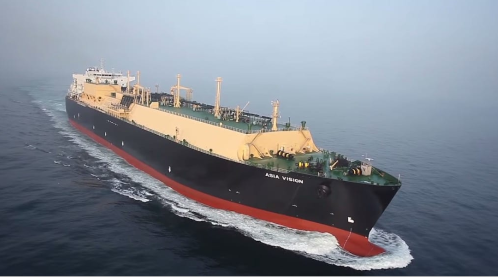
This marked the first U.S. LNG shipment during the modern shale gas era.
Inside its tanks was approximately 3.3 billion cubic feet of LNG.
It was the beginning of America’s transformation from a natural gas importer to the world’s largest LNG exporter.
You know as well as I do that the U.S. has solidified itself as one of the world’s largest LNG exporters over the last decade — last year we shipped out about 15 billion cubic feet per day.
In fact, Cheniere Energy alone has shipped over 3,300 cargoes worldwide from eight operational export terminals that dot the Gulf Coast, and is expecting the company’s export capacity to nearly double by 2031.
Then all hell broke loose this week after Israel decided to throw caution into the wind and strike Iran’s South Pars gas field.
You read that correctly. However, to put a little perspective on this, understand that we’re talking about the world’s largest natural gas reserve. Iran processes approximately 730 million cubic meters daily from the field — 70% of Iran’s domestic gas consumption.
Iran’s response was laden with fury…
The Best Free Investment You’ll Ever Make
Our analysts have traveled the world over, dedicated to finding the best and most profitable investments in the global energy markets. All you have to do to join our Energy and Capital investment community is sign up for the daily newsletter below.
Suddenly, Iranian missiles were fired all over the region’s energy infrastructure. Several of those ballistic missiles slammed into Qatar’s Ras Laffan Industrial City — the world’s largest LNG production facility, responsible for 20% of global LNG supply.
The results were nightmarish for LNG buyers across the world. Two of Qatar’s 14 LNG trains were destroyed, one of two gas-to-liquids facilities crippled, and roughly 12.8 million tons per year of LNG capacity went offline.
Do you want to know how bad things really are?
Qatar, who was forced to declare force majeure earlier this month as it halted production, had to declare force majeure on long-term LNG contracts to Italy, Belgium, South Korea, and China.
More devastating is that the damage to its infrastructure means it’ll take 3-5 years for Qatar to get things back online.
Folks, the Third Gulf War just obliterated 17% of Qatar’s LNG export capacity — exactly when the world needed it most.
And the United States?
Well, we’re one of the few LNG exporters left standing with the capacity to help fill the gap.
The Energy Crisis Nobody’s Watching
For the last three weeks, military action has more or less followed a pattern — military targets only.
The U.S. and Israel hit Iranian command centers, weapons depots, and IRGC facilities.
Iran struck back at military bases. Even Kharg Island — Iran’s crown jewel oil terminal handling 90% of crude exports — was attacked on March 14 with Trump personally announcing the U.S. hit only military targets, deliberately sparing oil infrastructure.
Israel’s attack recently shattered that restraint by hitting South Pars processing facilities at Asaluyeh. We’re talking about pure, vital energy infrastructure.
And the worst part is that it’s unclear whether President Trump was even aware that Israel was taking this war to the next level.
One fact has become a reality — energy infrastructure is officially on the table.
Within hours, Iran launched retaliatory strikes across the Gulf region.
I just mentioned how Qatar’s Ras Laffan took extensive damage — two LNG trains destroyed, one gas-to-liquids facility crippled.
However, Saudi Arabia’s Samref refinery was also hit, the UAE’s Habshan gas facility and Bab oil field shut down after intercepting missiles, and Israel’s Haifa refineries targeted. In Kuwait, two of the country’s refineries — Mina Al-Ahmadi and Mina Abdullah — were struck.
Simply put, missiles and drones rained fire down upon Middle East energy complexes.
Trust me, soon we’ll be missing the days when the only problem was constrained tanker traffic through the Strait of Hormuz.
Naturally, oil grabbed all the headlines first.
After all, Dubai crude spiked to $160 per barrel, and a barrel of DME Oman jumped as high as $173.
But natural gas is the crisis nobody’s watching closely enough.
QatarEnergy reported that $26 billion will be needed to repair the damage, and roughly 12.8 million tons per year of LNG will be sidelined for three to five years — minimum!
In case you’re counting, that’s roughly $20 billion in annual revenue, and the scale of the damage has set the region back 10 to 20 years.
Of course, if you don’t think the situation can get any worse, keep in mind that President Trump’s response to Iran’s retaliation was a threat to “massively blow up the entirety of the South Pars Gas Field” if Iran continues attacking Qatar’s facilities.
There’s no question that the shit has hit the fan in the Middle East.
And make no mistake — this is the worst case scenario.
You see, this isn’t just about temporary supply disruptions anymore. Qatar supplies roughly 20% of global LNG.
The Ras Laffan complex processed all the natural gas from the North Dome — Qatar’s side of the world’s largest gas field.
With 17% of that capacity destroyed for half a decade, Europe and Asia both now face structural supply gaps that strategic reserves and pipeline imports can’t fill.
Remember, the U.S. exported 15 billion cubic feet per day of LNG in 2025.
It’ll take another two years until our export capacity surpasses 18 billion cubic feet per day, with current expansion projects under construction boosting our LNG export capacity by 75% by 2030.
For the record, we’re the only major exporter with available capacity and the infrastructure to scale quickly.
Europe replaced Russian gas with U.S. LNG after 2022 — 68% of U.S. exports went to Europe through November 2025.
Now, Asian buyers who depended on Qatar need alternatives.
That’s your trillion-dollar opportunity…
Qatar’s Collapse Just Became Your Trillion-Dollar Opportunity
Look, the longer Iran holds out, the deeper this crisis extends into oil and gas fundamentals.
Qatar’s force majeure declarations run through 2031.
If Trump follows through on his threat to obliterate South Pars entirely, both sides of the world’s largest gas field could be crippled simultaneously.
If that happens, U.S. LNG producers and tanker companies will be in an enviable position.
So where should you look for opportunities during this unprecedented energy crisis?
Well, let’s take a look at the most important names that should be on every investor’s radar:
4 Must-Own U.S. LNG Stocks:
Cheniere Energy (NYSE: LNG) — The undisputed king of U.S. LNG. Operates Sabine Pass (Louisiana) and Corpus Christi (Texas) with roughly 50% of U.S. export capacity, and has shipped over 3,300 cargoes from Sabine Pass alone; expansion plans include 30 billion cubic feet per day by 2030.
Venture Global LNG (NYSE: VG) — As the second-largest U.S. exporter with approximately 15% market share, Venture operates the Plaquemines LNG (Louisiana) and is expanding into Corpus Christi after securing an $8.6 billion financing for CP2 Phase 2 expansion.
Sempra Infrastructure (NYSE: SRE) — Sempra is a major Gulf Coast and Pacific export competitor through its energy infrastructure arm, and holds diversified energy assets that provide stability alongside LNG growth exposure.
ExxonMobil (NYSE: XOM) and Chevron (NYSE: CVX) — Big Oil will always have significant LNG exposure. Exxon’s Golden Pass LNG (joint venture with QatarEnergy) alone is targeting 18 million tons per year capacity starting early 2026.
If you’re looking to branch out beyond just the exporters, it’s important to look at the tanker stocks that’ll support our exports. Some of the little gems here include:
Flex LNG (NYSE: FLNG) — An LNG carrier operator with a modern fleet under long-term charters.
Golar LNG (NASDAQ: GLNG) — Owns and operates LNG carriers, as well as floating storage and regasification units (FSRUs). Golar’s diversified marine LNG infrastructure is positioned to benefit from supply chain reconfigurations.
GasLog Partners (NYSE: GLOP) — This LNG carrier partnership with fleet chartered under multi-year contracts, and provides income-focused exposure to LNG shipping surge with established customer relationships.
The key to all of this comes down to one thing — duration.
The longer this war drags on, the more structural the supply gap becomes.
We know that Qatar’s damaged facilities won’t restart for 3-5 years even after hostilities cease, and it would be foolhardy to ignore President Trump’s threat to obliterate the rest of the South Pars field — that timeline extends indefinitely.
For us, U.S. LNG exports will be the golden goose as we become the default global supplier — not for months, but for years.
Until next time,

Keith Kohl
 Check us out on YouTube!
A true insider in the technology and energy markets, Keith’s research has helped everyday investors capitalize from the rapid adoption of new technology trends and energy transitions. Keith connects with hundreds of thousands of readers as the Managing Editor of Energy & Capital, as well as the investment director of Angel Publishing’s Energy Investor and Technology and Opportunity.
For nearly two decades, Keith has been providing in-depth coverage of the hottest investment trends before they go mainstream — from the shale oil and gas boom in the United States to the red-hot EV revolution currently underway. Keith and his readers have banked hundreds of winning trades on the 5G rollout and on key advancements in robotics and AI technology.
Keith’s keen trading acumen and investment research also extend all the way into the complex biotech sector, where he and his readers take advantage of the newest and most groundbreaking medical therapies being developed by nearly 1,000 biotech companies. His network includes hundreds of experts, from M.D.s and Ph.D.s to lab scientists grinding out the latest medical technology and treatments. You can join his vast investment community and target the most profitable biotech stocks in Keith’s Topline Trader advisory newsletter.


